
MIS Reporting Explained: Benefits, Types & Complete Guide
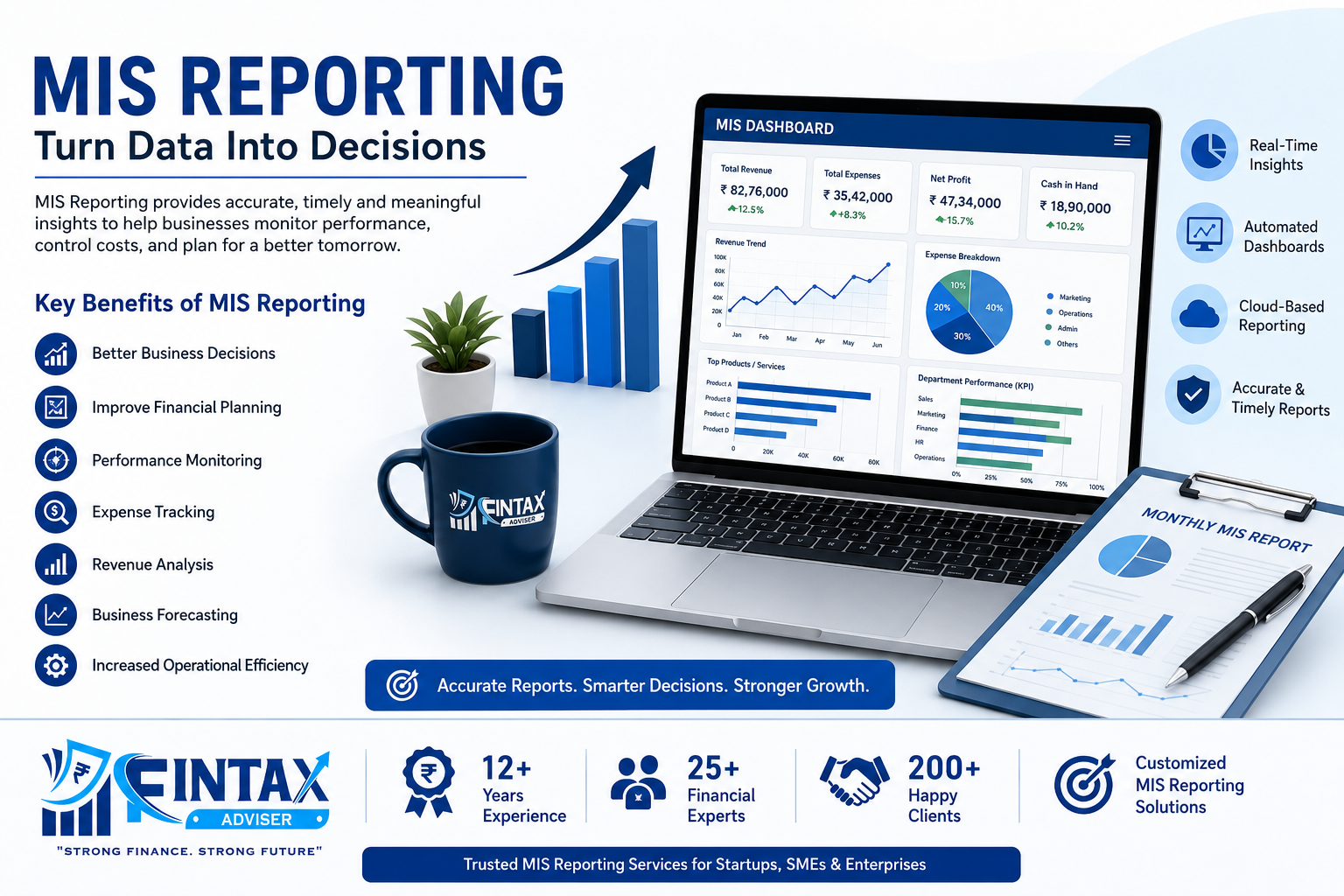
Every successful business depends on reliable information to make informed decisions, monitor performance, and plan for future growth. Without organized business data, it becomes difficult to identify opportunities, manage costs, or respond to changing market conditions. MIS Reporting plays a crucial role in transforming raw financial and operational data into meaningful reports that support strategic decision-making. From tracking sales and cash flow to measuring key performance indicators (KPIs), these reports help business owners and managers improve financial management, streamline operations, and drive sustainable growth. Whether you run a startup, SME, or large enterprise, an effective MIS reporting system provides the insights needed to make faster, smarter, and data-driven business decisions.
What is MIS Reporting?
MIS Reporting, short for Management Information System Reporting, is the process of collecting, organizing, analyzing, and presenting business data in a structured format to support informed decision-making. An MIS Report combines financial, operational, sales, and performance-related information into clear and actionable insights that help business owners and managers monitor overall business health. Instead of relying on scattered data, organizations use MIS Reporting to evaluate key performance indicators (KPIs), identify trends, control costs, and improve operational efficiency. Accurate and timely business data enables management to make strategic decisions with confidence, reduce risks, and respond quickly to market changes. Whether prepared daily, weekly, or monthly, Management Information System Reporting serves as a valuable tool for improving productivity, enhancing financial planning, and achieving long-term business growth.
Why is MIS Reporting Important for Businesses?
In today's competitive business environment, making decisions based on accurate data is essential for sustainable growth. MIS Reporting provides business owners and management teams with timely insights into financial and operational performance, enabling them to identify opportunities, address challenges, and improve overall efficiency. By combining Business Reporting, Performance Reporting, and Business Analytics, MIS reports help organizations make informed decisions backed by reliable data rather than assumptions.
Key benefits of MIS Reporting include:
- Better Business Decisions: Access real-time data to support faster and more informed decision-making.
- Improved Financial Planning: Monitor income, expenses, and cash flow to create effective financial strategies.
- Performance Monitoring: Track key performance indicators (KPIs) to measure departmental and organizational success.
- Expense Tracking: Identify unnecessary costs and control business spending more effectively.
- Revenue Analysis: Evaluate sales trends and revenue sources to maximize profitability.
- Business Forecasting: Use historical and current data to predict future business performance and market trends.
- Increased Operational Efficiency: Streamline workflows, optimize resource allocation, and improve overall business productivity.
Types of MIS Reports
Businesses use different types of MIS Reporting to monitor various aspects of their operations. Each MIS Report is designed to provide specific insights that help management improve efficiency, control costs, and make informed decisions. Depending on business requirements, these reports may be generated daily, weekly, or as a Monthly MIS Report to evaluate performance and support strategic planning.
Financial MIS Report
Financial MIS Reports provide a detailed overview of a company's financial performance, including revenue, expenses, profit margins, cash flow, and budgets. They are widely used by business owners, finance teams, and senior management for financial planning and decision-making.
Sales MIS Report
A Sales MIS Report tracks sales performance, customer trends, product demand, and sales targets. Sales managers use these reports to evaluate team performance, identify growth opportunities, and improve revenue generation.
Inventory MIS Report
Inventory MIS Reports monitor stock levels, inventory movement, reorder points, and warehouse performance. They help businesses avoid stock shortages, reduce excess inventory, and improve supply chain efficiency.
HR MIS Report
HR MIS Reports provide insights into employee attendance, payroll, recruitment, workforce productivity, and staff performance. Human resource departments use these reports to support workforce planning and employee management.
Production MIS Report
Production MIS Reports analyze manufacturing output, production costs, machine utilization, and quality metrics. Manufacturing businesses rely on these reports to improve operational efficiency and optimize production processes.
Project MIS Report
Project MIS Reports track project budgets, timelines, resource allocation, milestones, and overall progress. Project managers use these reports to monitor performance, identify risks, and ensure projects are completed on time and within budget.
Key Components of an Effective MIS Report
An effective MIS Report provides a clear and accurate view of a business's financial and operational performance, enabling management to make data-driven decisions. The quality of MIS Reporting depends on including relevant metrics that reflect the organization's current position and future opportunities. A well-structured report should contain the following key components:
- Revenue: Tracks total income generated from business operations.
- Expenses: Monitors operational and administrative costs to control spending.
- Profitability: Measures profit margins and overall business performance.
- Cash Flow: Analyzes cash inflows and outflows to maintain financial stability.
- KPI Reporting: Evaluates key performance indicators to measure business success.
- Charts & Graphs: Presents complex information in a simple and visual format.
- MIS Dashboard: Displays real-time business metrics for quick performance monitoring.
- Data Reporting: Ensures accurate, consistent, and reliable data for better decision-making.
How to Create an Effective MIS Report
Creating an effective MIS Report requires a structured approach to ensure the information is accurate, relevant, and easy to understand. Businesses can use MIS Reports in Excel for basic reporting or advanced MIS Reporting Software to automate data collection, analysis, and visualization. Follow these essential steps to prepare a reliable report:
- Collect Data: Gather financial, sales, operational, and departmental data from trusted sources.
- Verify Accuracy: Review and validate the data to eliminate errors, duplicates, and inconsistencies.
- Organize Information: Classify the data into meaningful categories such as revenue, expenses, inventory, or customer performance.
- Analyze Trends: Compare historical and current data to identify patterns, opportunities, and potential risks.
- Create a Visual Dashboard: Use charts, graphs, and dashboards to present key metrics in an easy-to-understand format.
- Share Reports with Management: Distribute the report to decision-makers for strategic planning and timely action.
- Monitor Business Performance: Regularly review and update the report to track progress, measure KPIs, and support continuous business improvement through effective MIS Reporting.
Benefits of MIS Reporting
Implementing MIS Reporting enables businesses to make informed decisions by transforming raw data into meaningful insights. Combined with Business Intelligence Reporting and Business Analytics, MIS reports help organizations improve operational efficiency, monitor performance, and achieve long-term growth. Whether you're a startup or an established enterprise, the benefits of MIS Reporting extend across every department.
Key benefits include:
- Faster Decision-Making: Access real-time data to respond quickly to business opportunities and challenges.
- Improved Productivity: Identify workflow bottlenecks and optimize daily operations.
- Better Financial Control: Track revenue, expenses, and cash flow to maintain financial stability.
- Effective Risk Management: Detect potential risks early and take proactive corrective actions.
- Efficient Resource Allocation: Allocate budgets, manpower, and assets based on accurate business data.
- Greater Business Transparency: Provide clear visibility into business performance across departments.
- Accurate Performance Evaluation: Measure KPIs and employee or departmental performance consistently.
- Cost Reduction: Identify unnecessary expenses, improve operational efficiency, and maximize profitability through data-driven decisions.
MIS Reporting vs Financial Reporting
Although MIS Reporting and Financial Reporting both use business data, they serve different purposes. MIS Reporting is primarily designed for internal management to monitor business performance, analyze trends, and support strategic decision-making. In contrast, Financial Reporting focuses on preparing standardized financial statements that comply with accounting standards and regulatory requirements for external stakeholders such as investors, banks, auditors, and government authorities. Understanding these differences helps businesses use the right type of report for operational management and financial compliance.
| Feature | MIS Reporting | Financial Reporting |
| Purpose | Supports internal decision-making and business planning | Meets statutory, legal, and external reporting requirements |
| Primary Users | Business owners, managers, and department heads | Investors, banks, auditors, tax authorities, and regulators |
| Reporting Frequency | Daily, weekly, monthly, or as required | Quarterly and annually |
| Main Focus | Operational performance, KPIs, sales, expenses, and business insights | Financial statements, profitability, assets, liabilities, and compliance |
| Format | Interactive dashboards, charts, graphs, and customized reports | Balance Sheet, Profit & Loss Statement, Cash Flow Statement, and Notes to Accounts |
| Flexibility | Highly customizable based on business needs | Standardized according to accounting principles and legal regulations |
Common Challenges in MIS Reporting
While MIS Reporting provides valuable business insights, its effectiveness depends on the quality and accuracy of the underlying data. Businesses often encounter challenges that can impact reporting accuracy and decision-making. Some of the most common issues include:
- Poor Data Quality: Incomplete or inaccurate data can lead to unreliable reports.
- Manual Reporting Errors: Manual data entry increases the risk of calculation and formatting mistakes.
- Delayed Reports: Late reporting prevents timely business decisions and performance reviews.
- Inconsistent Data: Information collected from multiple sources may lack standardization.
- Lack of Automation: Manual processes consume time and reduce reporting efficiency.
- Data Duplication: Duplicate records can distort business insights and affect report accuracy.
Addressing these challenges through standardized processes and automated reporting tools helps businesses generate accurate, timely, and actionable MIS reports.
Why Choose FinTax Adviser for MIS Reporting Services?
At FinTax Adviser, we help businesses transform complex financial and operational data into meaningful insights through reliable MIS Reporting Services. Our team of experienced financial professionals delivers customized MIS Reporting solutions tailored to the unique needs of startups, SMEs, and large enterprises. From preparing Monthly MIS Reports and business performance analysis to automated dashboards, cloud-based reporting, and accounting and bookkeeping support, we provide end-to-end reporting solutions that improve decision-making and business efficiency. With a commitment to accuracy, transparency, and timely delivery, we enable businesses to monitor performance, optimize resources, and achieve sustainable growth.
Why Businesses Trust FinTax Adviser
- ✔ 12+ Years of Industry Experience
- ✔ 25+ Experienced Financial Experts
- ✔ 200+ Happy Clients Across India
- ✔ Accurate & Timely MIS Reports
- ✔ Affordable and Transparent Pricing
- ✔ Customized MIS Reporting Solutions
- ✔ Cloud-Based Reporting & Automated Dashboards
- ✔ Dedicated Business Support for Startups, SMEs, and Enterprises
Frequently Asked Questions
1. What is MIS Reporting?
MIS Reporting is the process of collecting, analyzing, and presenting business data in a structured format to help management monitor performance, make informed decisions, and achieve business objectives.
2. Why is MIS Reporting important?
MIS Reporting provides accurate and timely business insights that support strategic planning, improve operational efficiency, monitor financial performance, and enable faster decision-making.
3. What are the different types of MIS Reports?
Common types of MIS Reports include Financial MIS Reports, Sales MIS Reports, Inventory MIS Reports, HR MIS Reports, Production MIS Reports, and Project MIS Reports.
4. Who needs MIS Reporting Services?
MIS Reporting Services are beneficial for startups, small and medium-sized enterprises (SMEs), large organizations, manufacturers, retailers, service providers, and any business that relies on data-driven decision-making.
5. Can small businesses use MIS Reporting?
Yes. Small businesses can use MIS Reporting to monitor cash flow, track expenses, analyze sales performance, and make better business decisions without requiring a large finance team.
6. What software is used for MIS Reporting?
Businesses commonly use Microsoft Excel, Microsoft Power BI, Tableau, Google Looker Studio, Zoho Analytics, TallyPrime, ERP systems, and other cloud-based MIS Reporting Software to prepare and analyze reports.
7. How often should an MIS Report be prepared?
The reporting frequency depends on business requirements. Many organizations prepare Daily, Weekly, and Monthly MIS Reports, while some also generate quarterly reports for strategic reviews.
8. What is the difference between MIS Reporting and financial reporting?
MIS Reporting focuses on internal business performance, KPIs, and operational analysis for management, whereas financial reporting is prepared according to accounting standards for external stakeholders such as investors, banks, and regulatory authorities.
9. What information should an MIS Report include?
A comprehensive MIS Report typically includes revenue, expenses, profit, cash flow, sales performance, budgets, key performance indicators (KPIs), operational metrics, charts, dashboards, and business trends.
10. What are the benefits of outsourcing MIS Reporting Services?
Outsourcing MIS Reporting Services gives businesses access to experienced financial professionals, automated reporting tools, customized dashboards, accurate reports, and reduced operational costs while allowing management to focus on business growth.
11. How does MIS Reporting improve business performance?
By providing real-time business insights, MIS Reporting helps organizations identify inefficiencies, optimize resources, reduce unnecessary expenses, monitor KPIs, and make data-driven decisions that improve overall performance.
12. Why should businesses choose FinTax Adviser for MIS Reporting Services?
FinTax Adviser offers customized MIS Reporting solutions, automated dashboards, cloud-based reporting, accounting and bookkeeping support, and expert financial analysis. With 12+ years of experience, 25+ financial experts, and 200+ satisfied clients, we help businesses make smarter financial decisions through accurate and timely MIS reports.
Conclusion
MIS Reporting has become an essential tool for businesses that want to make informed decisions, improve financial control, and enhance operational performance. By converting business data into meaningful insights, regular MIS Reports help organizations monitor KPIs, identify growth opportunities, and respond quickly to changing market conditions. Whether you are a startup, SME, or large enterprise, investing in professional MIS Reporting Services can streamline reporting processes, improve business efficiency, and support sustainable long-term growth. Choosing an experienced partner like FinTax Adviser ensures accurate, timely, and customized reports that empower your business to succeed.